
What is the song on the Vodafone advert?
A guide to identifying the songs used in recent Vodafone UK adverts, including confirmed tracks and how to find the music yourself.
Songs and tracks from UK TV adverts
Songs, artists and tracks featured in current and recent UK TV adverts. Identifications backed by official sources, music supervisor credits and brand confirmations.

Wondering what song plays in the Go Turkey advert? Here is what we know about the music, its origins and how to identify tracks used in Turkey-related ads.
A guide to identifying the songs used in recent Vodafone UK adverts, including confirmed tracks and how to find the music yourself.

The current Tesco "Food Isn't A Little Thing" advert features "Home" by London duo Good Neighbours. Earlier campaigns used "On Melancholy Hill" by Gorillaz.

Airbnb's 2026 adverts feature Beatles song Golden Slumbers and a Landslide cover, sparking debate among music fans online.

Lucy Dacus performs "Home Again" in the emotional IKEA Coming Home advert 2026. Find out about the Carole King cover song featured in the new UK campaign.
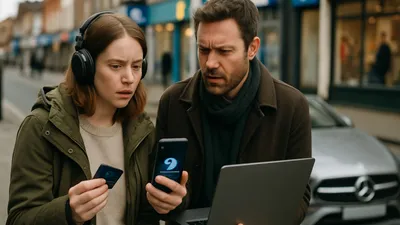
The new Mercedes advert 2026 features the song Yellow by Jonas Max Paul Meyer, recorded specially for the UK TV campaign.

Turkish Airlines' Güneşin Doğuşu advert features Eurovision winner Sertab Erener's voice in the 2021 "Globally yours!" campaign alongside Mahmut Orhan's "Fly Above" track.

Justin Timberlake sang the McDonald's "I'm Lovin' It" jingle released in 2003, produced by The Neptunes with Pharrell Williams and Chad Hugo.

Beautiful Things by Benson Boone features in the new BMW UK advert 2026, promoting the brand's 100% electric driving pleasure campaign.

The IKEA UK advert song in 2026 features artist Daughter on the "Silence The Critics" campaign, which accumulated 2.4 million YouTube views since its 2019 release.

The Only Peroni UK 2026 advert launched in March 2026 as the brand's biggest advertising investment in years, marking a return to Peroni's Italian heritage and DNA.

British Gas adverts have featured Blur's "The Universal" and Dire Straits' "Walk of Life" as soundtracks. Find out which songs appeared in their campaigns through 2026.
The Co-op Plot Twist advert 2026 features Whoomp There It Is by Tag Team, produced by Girl and Bear with agency VCCP. Detailed answer with sources.

Co-op Funeralcare's 2026 '1 Brilliant Life' campaign features a Lady Gaga song. Find out which track plays in the funeral advert created by VCCP London.

Radio Babylon by Meat Beat Manifesto plays on the new Co-op Christmas advert 2024 2025, a nostalgic UK campaign similar to John Lewis adverts.

The Tesco Mobile 'Wake Up Call' advert features 'Morning Mood' by the London Philharmonic Orchestra, originally recorded in 1959. Find out which Tesco adverts use 'Bad To The Bone' and other popula...
Few things send a viewer to their phone faster than an advert whose soundtrack they cannot place. The music in a TV commercial works on the same psychological levers as the product being sold: it shapes mood, triggers memory, and can turn a thirty-second slot into something people actively seek out afterwards. In the UK, where television advertising remains a major industry, the question 'what is that song from the advert?' is one of the most common music-related searches online.
The relationship between brands and music is older than television itself, but the modern era has made it more competitive. Streaming catalogues have given agencies access to millions of tracks, while sync licensing costs for well-known songs can run to six figures for a single campaign. The result is a varied landscape: heritage hits licensed for nostalgia, contemporary chart singles given a commercial boost, and bespoke compositions recorded specifically for a campaign.
This page surveys the topic broadly, covering how advert music is chosen, why certain tracks become so strongly associated with particular brands, and where to find answers when a specific song is stuck in your head. Individual brand articles are linked throughout for readers with a more specific query.
Music supervision is a specialist discipline, and most large UK advertisers work with dedicated sync agencies or in-house music teams. The process typically starts with a creative brief: the agency or brand defines the emotional register they want, the demographic they are targeting, and any existing brand audio guidelines. From there, a music supervisor will pitch a shortlist of tracks, ranging from well-known catalogue recordings to emerging artists or purpose-built compositions.
Budget is a significant constraint. Licensing a globally recognised track from a major label can cost anywhere from tens of thousands to several hundred thousand pounds for a single UK television campaign, depending on the song's profile and the media buy behind the advert. Smaller brands often commission original music or work with unsigned artists, which keeps costs manageable while still giving the advert a distinctive sound. The BBC has reported on the growing market for sync licensing as streaming has made music discovery easier for both supervisors and audiences.
A significant proportion of memorable UK advert soundtracks draw on older catalogue material. Nostalgia is a reliable emotional trigger, and a song that carries personal associations for a viewer can transfer positive feeling to a brand almost instantaneously. This is why adverts for supermarkets, banks, and household brands so frequently reach back to the 1970s, 1980s, and 1990s. The Co-op's use of Tag Team's 'Whoomp There It Is' in its 2026 campaign is a recent example of this approach, as detailed in {post:what-is-the-song-on-the-co-op-advert}.
Catalogue choices also carry risk. A track that has strong existing associations, whether political, cultural, or generational, can pull viewers out of the intended emotional experience. Agencies spend considerable time researching how a song is perceived across different audience segments before committing to a licence. The Advertising Standards Authority (ASA) has published guidance on the broader responsibilities of advertisers, though music selection itself falls outside its direct remit.
Not every advert soundtrack is a licensed track. Bespoke compositions, written and recorded specifically for a campaign, give brands full ownership of the music and avoid the complications of sync licensing. The McDonald's 'I'm Lovin' It' jingle is one of the most enduring examples globally; the history of that piece and its connection to Justin Timberlake is covered in {post:what-is-the-song-from-the-mcdonalds-advert}. In the UK, financial services and utility companies have historically favoured bespoke music because it allows them to build a consistent audio identity across years of campaigning.
The line between a bespoke composition and a cover version is sometimes blurred. Brands occasionally commission new recordings of existing songs, either to reduce licensing costs or to give a familiar melody a fresh feel. IKEA's 2026 'Coming Home' campaign used Lucy Dacus performing a cover of Carole King's 'Home Again', a choice that balanced the emotional weight of a recognised song with a contemporary vocal performance, as explored in {post:what-is-the-music-on-the-new-ikea-advert}.
Sync licensing is not a one-way transaction. For emerging or mid-level artists, appearing in a high-profile UK TV campaign can deliver a significant uplift in streams and downloads. Ofcom's annual Media Nations report consistently shows that commercial television reaches tens of millions of UK adults each week, meaning a well-placed advert can expose a track to an audience far larger than most artists could reach through organic promotion alone. Benson Boone's 'Beautiful Things' gained considerable additional UK exposure through its use in BMW's 2026 campaign, a placement covered in {post:what-is-the-song-on-the-bmw-advert}.
The effect is measurable. Spotify and Apple Music both show chart movements in the days following a major campaign launch, and music industry trade publication Music Week regularly tracks what it calls the 'sync bump'. For artists at the right stage of their career, a single advert placement can outperform months of conventional promotional activity. Toyota's 2026 Aygo X Hybrid campaign, which featured debut single 'Run My Way' by British boyband December 10, is a clear example of a brand and an emerging act finding mutual benefit, as noted in {post:what-is-the-music-on-the-toyota-advert}.
Christmas advert music occupies a category of its own in the UK. The annual release of major retailer campaigns, led by John Lewis since 2011, has created a cultural moment in which the choice of song is treated as news. Ofcom data shows that television viewing increases significantly in December, amplifying the reach of these campaigns. The music choices in Christmas adverts are scrutinised in the press, discussed on social media, and frequently propel older or lesser-known tracks into the top forty.
The Co-op's Christmas 2024 campaign used 'Radio Babylon' by Meat Beat Manifesto, an unconventional choice that drew attention precisely because it departed from the sentimental ballads associated with the season, as covered in {post:what-is-the-song-on-the-new-co-op-advert}. This willingness to subvert expectations has become its own genre within seasonal advertising, with brands aware that a surprising music choice generates press coverage that extends the campaign's effective reach well beyond its paid media budget.
The practical question most people arrive at this site with is straightforward: they heard a track in an advert, they cannot identify it, and they want to know what it is. Several tools are useful here. Shazam and SoundHound can identify music from a live audio sample, which works if the advert is currently airing. For adverts seen earlier, searching the brand name alongside 'advert song' or 'advert music' on YouTube often surfaces the official campaign video, which may carry a music credit in the description.
Brand social media accounts and official press releases are reliable primary sources when they are available. Many major advertisers now credit the music in their campaign press packs as a matter of course, partly because the sync bump benefits both parties. When those sources are not available, dedicated articles on sites like this one provide verified answers. Readers looking for specific brands can browse the articles in this category, which cover everything from supermarkets and fast food chains to car manufacturers and travel brands.
The quickest method is to use Shazam or SoundHound while the advert is playing. If you missed it, search the brand name and 'advert song' on YouTube, as most major campaigns are uploaded officially with music credits in the description. Brand press offices and dedicated music identification articles are also reliable sources.
There is no legal requirement in the UK for advertisers to publicly credit music in their commercials, though PRS for Music requires that all broadcast music is licensed and reported. Many brands now voluntarily credit music in press materials because the publicity benefits both the advertiser and the artist.
Catalogue music carries emotional associations that newer tracks have not yet built, making it effective at triggering nostalgia and positive feeling quickly within a short commercial slot. Agencies also find it easier to predict audience response to a well-known song than to an unfamiliar one.
Yes. The Official Charts Company tracks streaming and download data, and a major TV campaign can generate enough activity to push a track into the top forty, particularly if the advert airs heavily during peak viewing periods. This effect is most pronounced for catalogue tracks that are not currently in active promotion.
Costs vary enormously depending on the song's profile, the territory, and the length of the campaign. Industry estimates from PRS for Music and Music Week suggest that licensing a globally recognised track for a major UK campaign typically starts at around £100,000 and can exceed £500,000 for the most in-demand recordings.
A sync licence covers the right to use the underlying composition (the melody and lyrics) and is granted by the music publisher. A master licence covers the right to use a specific recording and is granted by the record label. Both are required to use a commercially released track in a TV advert.
Commissioning a cover version means a brand only needs a sync licence for the composition, avoiding the often higher cost of the master licence for a famous original recording. A new arrangement can also give a familiar song a tone or tempo that suits the advert better than the original.
TV advert music sits at an intersection of commerce, culture, and psychology that makes it genuinely interesting beyond the immediate question of identification. The choices brands make reflect broader trends in music consumption, licensing economics, and audience research, and the songs that end up on screen often have stories worth knowing. Whether a track is a 1985 synth-pop hit repurposed for a fast food chain or a debut single by a new British act given its biggest platform yet, the context behind the placement adds a layer of meaning to what might otherwise seem like background noise.
The articles in this category cover individual campaigns in detail, with verified information about the songs, artists, and context behind each placement. If a specific advert brought you here, use the search function or browse the listings below. If you arrived with a broader curiosity about how advert music works, the subsections above should give you a solid grounding in a topic that rewards attention.